
Payment Speed Is a Mirage
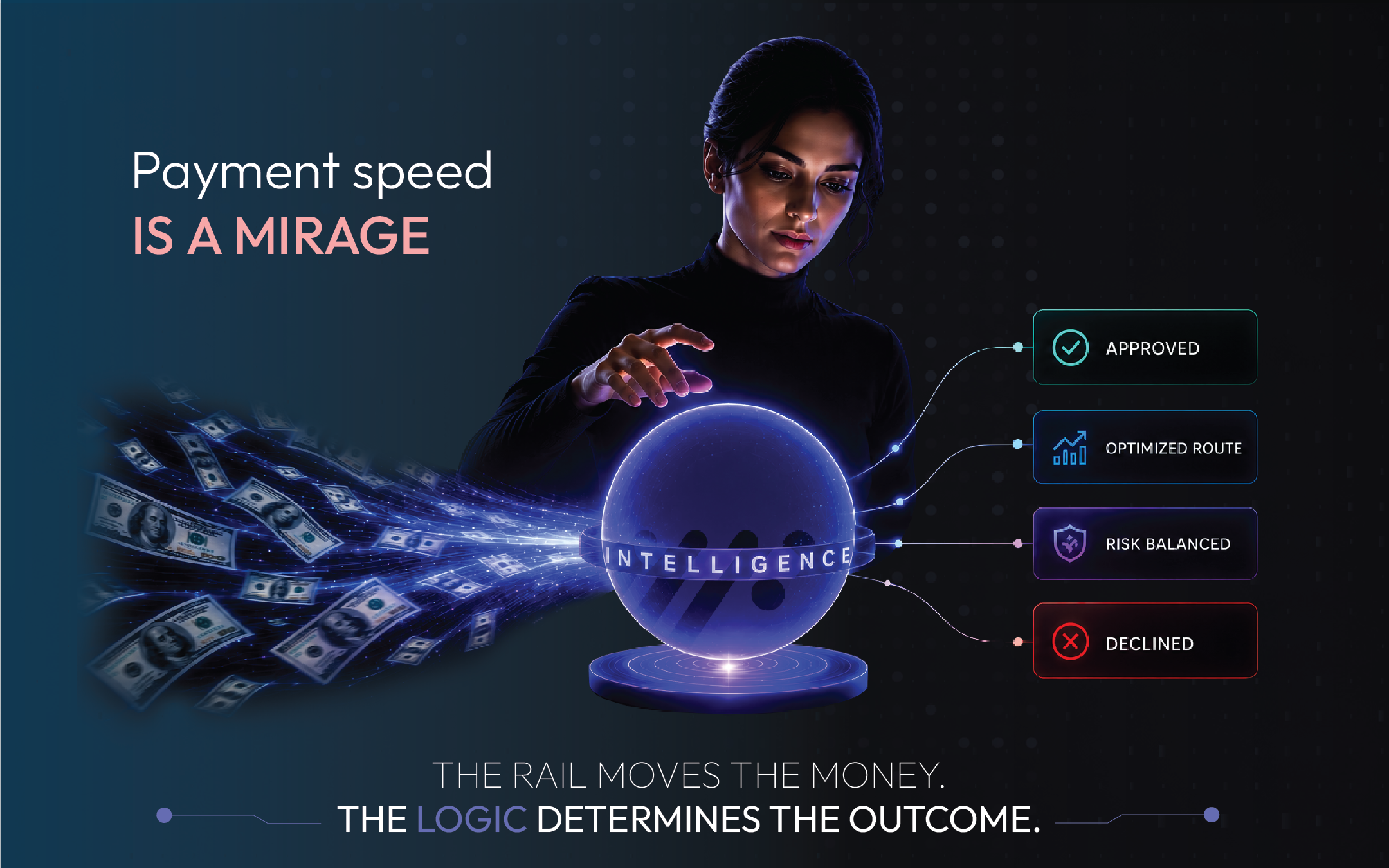
The Illusion of Speed
Over the past decade, the global payments industry has been defined by a relentless pursuit of speed. The narrative has been consistent across markets and technologies: faster payments lead to better outcomes. From the rollout of SEPA Instant Credit Transfer across Europe to the launch of FedNow in the United States, the industry has invested heavily in reducing the time it takes for money to move from one account to another.
This shift has been driven by real demand. Consumers increasingly expect immediacy in every digital interaction, and payments are no exception. Merchants, particularly in high,frequency digital environments, are under growing pressure to accelerate liquidity while maintaining conversion and control.
Yet beneath this acceleration lies a structural misunderstanding, one that continues to shape how payment systems are designed.
Speed has become the visible metric.
Performance, however, remains the invisible one.
At Morefin, we increasingly see that the two are often confused. Faster execution does not inherently lead to better outcomes. Without intelligence behind it, speed simply compresses the time it takes to reach the same result, whether optimal or flawed.
The Misconception: Faster Rails Equal Better Outcomes
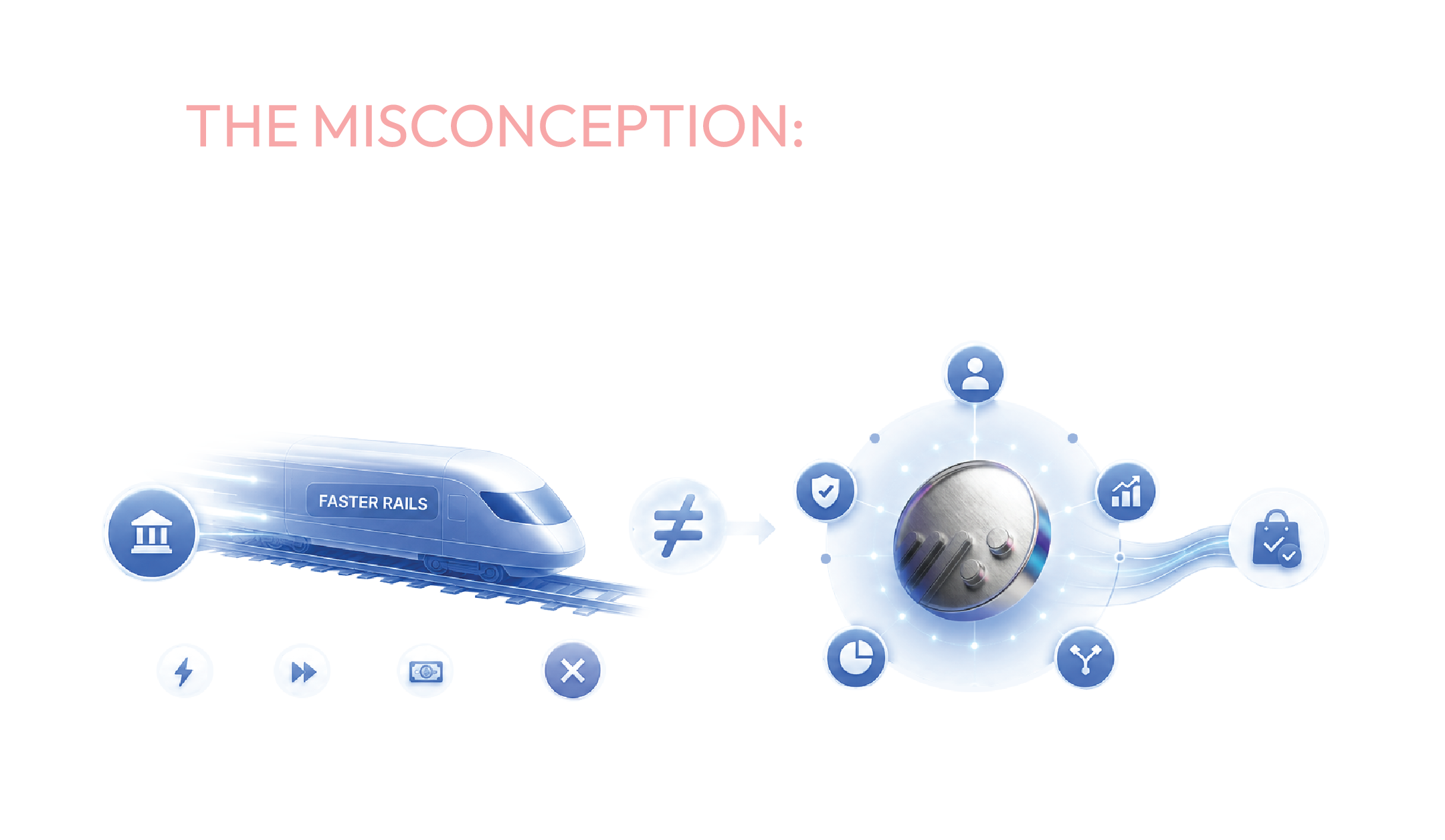
The industry has historically anchored innovation in payment rails, the infrastructure responsible for moving money. Improvements in rails have been framed as improvements in performance, creating the assumption that faster movement equates to better results.
But payment rails, by design, are execution layers.
They facilitate the transfer of funds, but they do not determine how a transaction should be handled. They do not decide which acquiring bank is best suited for a specific payment, how approval rates can be maximized across issuers, or how risk should be dynamically evaluated in real time.
This distinction is critical.
Because in modern payment environments, the outcome of a transaction is rarely determined by the rail itself. It is determined by the decisions that precede it.
This is where many systems begin to fall short, not because of a lack of connectivity, but because of a lack of control.
From Payment Processing to Real,Time Decisioning
As businesses expand across markets and payment ecosystems become more fragmented, transactions are influenced by an increasingly complex set of variables. Issuer behavior differs by region, approval rates fluctuate across providers, and payment methods perform inconsistently depending on context.
In such an environment, static routing logic becomes insufficient.
Payments can no longer be treated as linear processes that follow predefined paths. Instead, they must be approached as dynamic systems that require continuous evaluation, adaptation, and optimization.
This is where orchestration evolves beyond its traditional definition.
At Morefin, orchestration is not viewed simply as a way to connect multiple PSPs. It is understood as a decisioning layer, a system that evaluates each transaction in real time and determines the most effective way to process it based on current conditions.
sThis includes assessing:
- Live PSP performance
- Issuer,specific approval behavior
- Regional payment preferences
- Transaction,level risk signals
- Historical and predictive performance patterns
The shift is subtle but fundamental.
Payments are no longer about processing transactions.
They are about orchestrating outcomes.
When Speed Amplifies Failure
The limitations of a speed-first approach become particularly visible when transactions fail.
In traditional payment setups, a declined transaction is often treated as a final outcome. Even when processed through instant rails, the result remains unchanged: the payment is rejected, and the customer experience is disrupted.
In highconversion environments, this is not just a technical issue, it is a direct revenue loss.
Realtime payments intensify this dynamic. When the expectation is instant success, there is little tolerance for friction and even less willingness from users to retry.
However, when an intelligent orchestration layer is introduced, the nature of failure changes.
A declined transaction becomes a signal, not an endpoint.
At Morefin, we see this shift as one of the most critical inflection points in modern payment architecture. Instead of accepting failure, systems can respond to it by rerouting transactions dynamically, selecting alternative providers, or adapting parameters in real time to improve success rates.
In this context, speed becomes meaningful only when paired with adaptability.
Without it, faster payments simply lead to faster missed opportunities.
The Real Infrastructure: Logic Over Connectivity

For years, building payment infrastructure meant expanding connectivity, adding more providers, integrating additional payment methods, and increasing geographic reach. While these capabilities remain important, they do not inherently solve the challenge of performance.
In many cases, they introduce additional complexity.
Multiple integrations without centralized control often result in fragmented systems, inconsistent routing, and limited visibility into performance drivers. Businesses may have access to a wide network of providers, yet still struggle to optimize outcomes.
The real infrastructure behind modern payments is no longer defined by how many connections exist, but by how effectively they are managed.
This is where the logic layer becomes central.
At Morefin, this layer is treated as the core of the payment system, the component that brings structure, intelligence, and coordination to an otherwise fragmented ecosystem.
It is this layer that enables:
- Real,time decision,making
- Dynamic routing and failover
- Continuous performance optimization
- Full visibility across providers and flows
In essence, it transforms payments from a collection of integrations into a cohesive, controlled system.
Orchestration as Performance Infrastructure
As orchestration matures, it is increasingly recognized not as an add-on, but as a foundational component of payment architecture.
It becomes the layer through which performance is actively managed.
Rather than relying on a single provider or static routing rules, businesses can operate across multiple PSPs simultaneously, dynamically allocating transactions based on realtime performance signals. This creates a more resilient, adaptable system that can respond to fluctuations in approval rates, latency, or availability.
At the same time, orchestration enables a shift from reactive to proactive operations. Issues are no longer addressed after they occur, but anticipated and mitigated in advance.
This is where payments begin to evolve from operational necessity to strategic capability.
A perspective that is increasingly shaping how platforms like Morefin approach the role of payments within the broader business model.
Why This Matters Now
The transition to realtime payments has raised expectations across the ecosystem, but it has also reduced the margin for error.
When transactions are processed instantly, there is no opportunity to recover from poor decisions. Failures are immediate, and their impact is often irreversible.
This places significant pressure on the systems that govern payment flows.
Without intelligent orchestration, the speed of modern rails can expose weaknesses in routing logic, risk handling, and operational processes. What was once a manageable inefficiency becomes a critical failure point.
Conversely, organizations that invest in decisioning infrastructure are able to leverage realtime payments more effectively, using speed as an enabler rather than a constraint.
The New Competitive Advantage
As the payments landscape continues to evolve, competitive advantage is shifting away from access to infrastructure and toward the ability to control it.
Speed is no longer a differentiator on its own. It is a baseline expectation.
What differentiates high,performing organizations is their ability to make better decisions: faster, more accurately, and at scale.
This requires a different way of thinking about payments.
Not as isolated transactions.
But as part of a broader performance system.
One where orchestration plays a central role, not just in connecting providers, but in enabling intelligence, adaptability, and control.
Final Thought
The payments industry has spent years building faster rails and more efficient ways to move money. These advancements have been essential in enabling the digital economy.
But the next phase of evolution will not be defined by speed alone.
It will be defined by how intelligently payments are executed.
Because ultimately:
The rail moves the money.
The logic determines the outcome.
And increasingly, it is this logic: quietly operating behind the scenes, that defines whether a payment system performs… or simply processes.
Related articles


Let’s Build the Right
Flow for You
Ready to elevate your digital payments? Our team is here to tailor a custom, high-performance infrastructure that scales with your ambitions. Let’s build your next competitive advantage - together.