
Payment Performance Isn’t About Rails. It’s About Decisions.
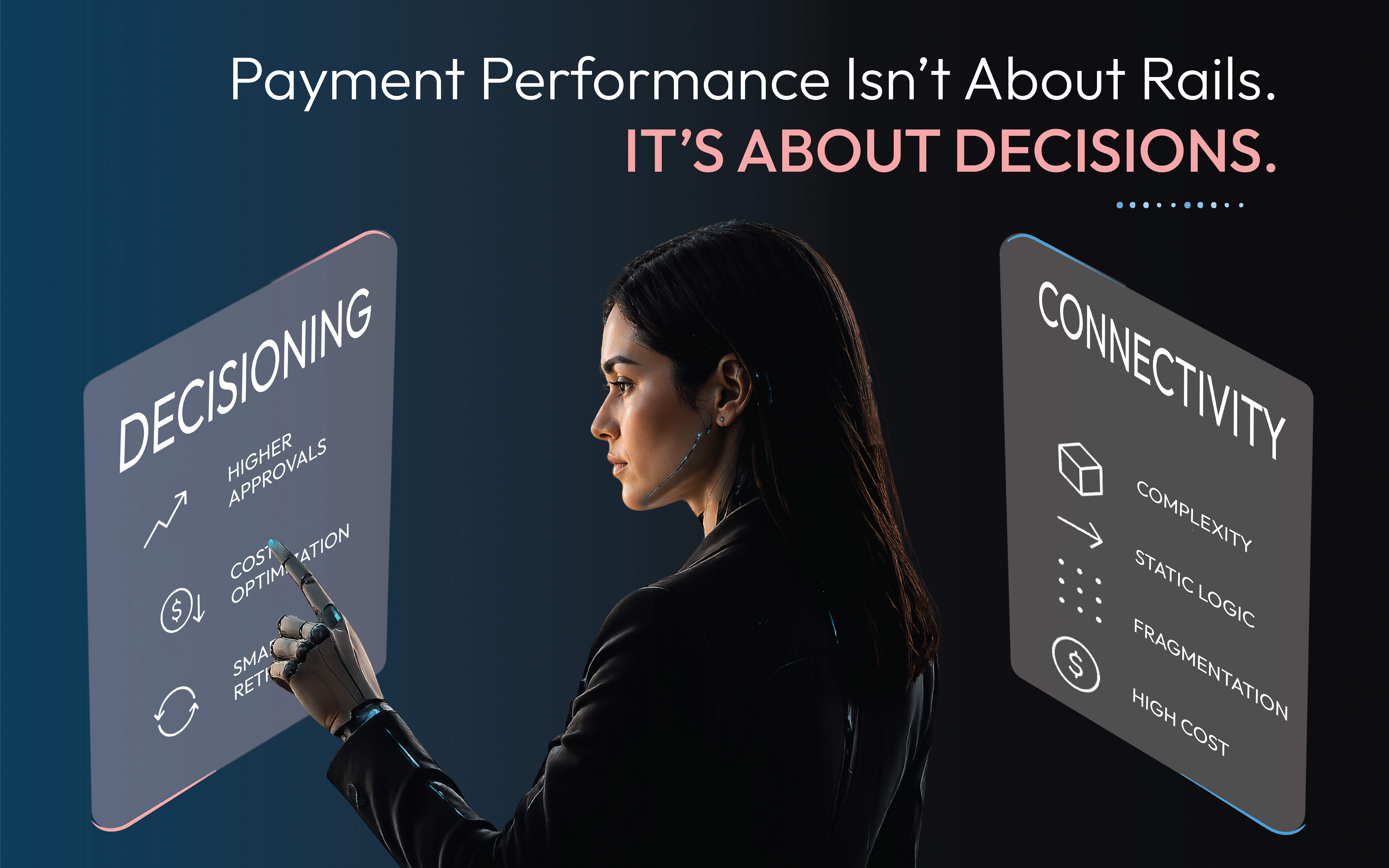
For more than a decade, the payments industry has been fixated on infrastructure. Each new wave, whether alternative payment methods, local acquiring, or instant payment rails, arrived with the same promise: better performance. Faster transactions, higher approval rates, lower costs.
Yet despite unprecedented access to payment methods and providers, many businesses continue to face the same structural challenges. Approval rates remain inconsistent. Visibility is fragmented. Outcomes are difficult to predict.
This contradiction reveals a fundamental truth. The real constraint in payments has never been the rail itself. It has always been the logic that determines how those rails are used.
The Shift from Connectivity to Decisioning
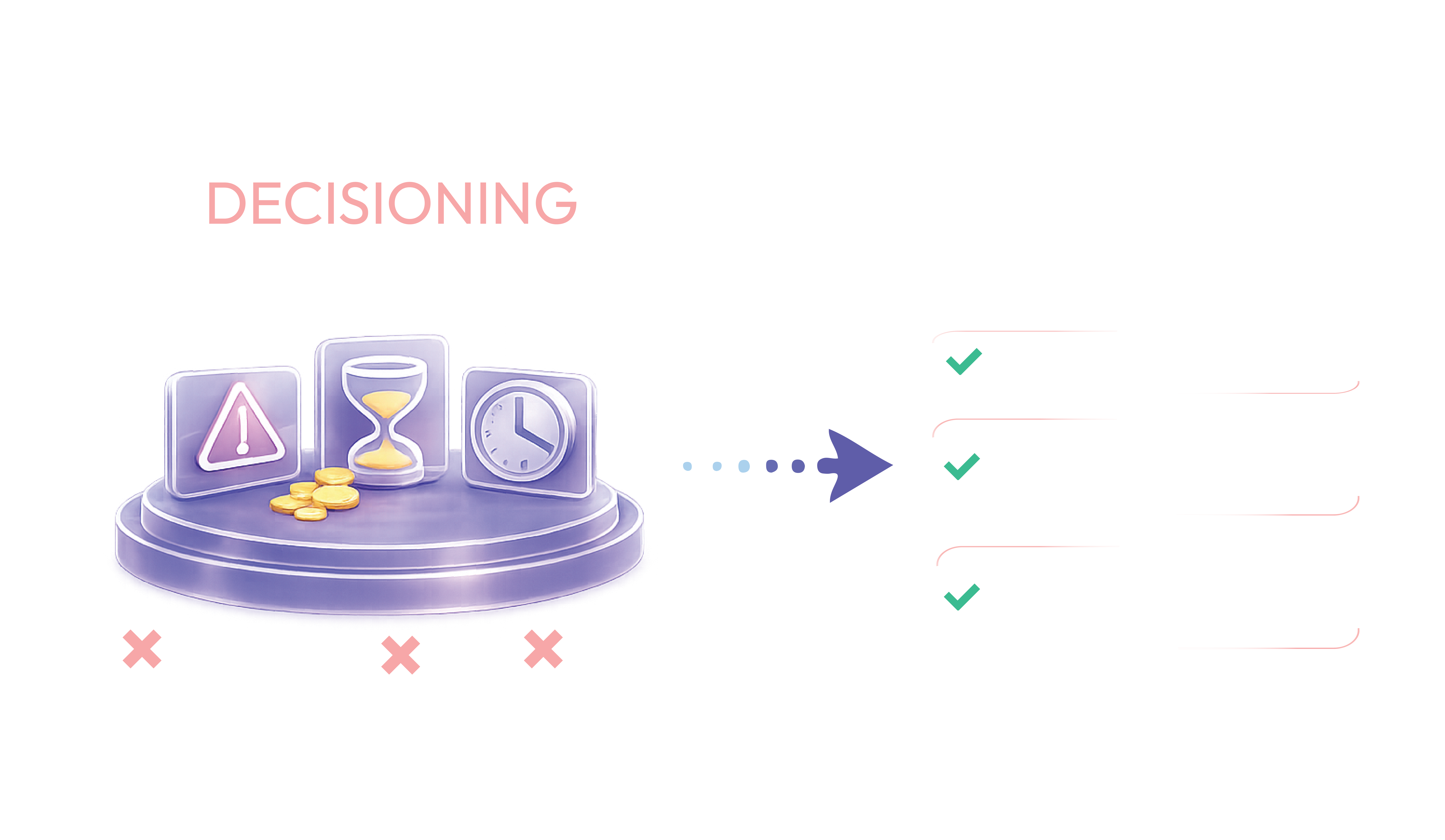
Historically, payment performance was closely tied to access. Expanding into new markets required integrating new providers. Increasing conversion meant adding more payment methods. Diversification improved resilience.
That model reflected the reality of a fragmented ecosystem where connectivity was complex and expensive.
Today, the landscape is fundamentally different. Most established businesses already have access to multiple PSPs, a wide range of payment methods, and both global and local acquiring capabilities. Integrations that once required months can now be completed in a fraction of the time.
As a result, connectivity is no longer the primary differentiator. Two companies can operate with nearly identical setups and still achieve significantly different results.
The difference lies in how decisions are made.
Payments as a Dynamic Decision System
Every transaction carries a unique context. Factors such as geography, issuing bank, payment method, transaction size, user behaviour, and real time provider performance all influence the likelihood of success.
Despite this complexity, many payment systems still rely on static flows. Transactions are sent through predefined paths with limited ability to adapt to changing conditions.
In reality, payments are not linear processes. They are dynamic systems of decisions.
Each transaction presents a series of choices. Which provider should process it. Whether it should be routed locally or cross border. How to balance approval rates against cost. Whether a failed transaction should be retried and under what conditions.
The quality of these decisions determines the outcome.
Not the rail.
Understanding the Performance Gap
It is increasingly common to observe businesses operating in the same markets, using the same providers, and offering the same payment methods, yet achieving vastly different performance levels.
One organisation may struggle with approval rates in the mid seventies. Another may consistently exceed ninety percent.
This disparity is rarely the result of infrastructure alone. More often, it reflects differences in how transactions are routed, how failures are handled, and how quickly systems respond to performance changes.
Performance is not embedded in the provider. It is created through decisioning.
The Emergence of the Decision Layer
A new layer has emerged within modern payment architectures. This is the decision layer.
Positioned above the rails, it governs how transactions are processed. It determines routing, retry logic, prioritisation, and risk handling. More importantly, it operates in real time, continuously adapting to signals across providers and markets.
In advanced environments, this layer evolves constantly. It learns from every transaction, refining future decisions and improving outcomes over time.
This is where payment performance is truly generated.
The Morefin Perspective
At Morefin, this shift is not theoretical. It is operational.
Across industries such as iGaming, fintech, and digital platforms, the same pattern repeats. Businesses do not struggle because they lack providers. They struggle because they lack control over decisioning.
Early orchestration platforms addressed the need for connectivity by aggregating providers and enabling basic routing capabilities. While this was a necessary step forward, it is no longer sufficient.
Static rules cannot keep pace with dynamic environments.
The next stage is intelligent orchestration. This approach evaluates each transaction in context, using real time data to inform decisions rather than relying on predefined logic.
This is where the role of payments changes fundamentally. It moves from a background operational function to a core performance engine within the business.
At Morefin, the focus is not on adding more rails, but on extracting more performance from the existing ecosystem through smarter decisioning.
The Impact on Financial Control
The implications of this shift extend beyond transaction success rates. They directly affect how money flows through the organisation.
When decisioning is weak, transactions are misrouted, failures are not effectively recovered, and settlement timelines become inconsistent. Reconciliation becomes more complex, and financial visibility is delayed.
These inefficiencies accumulate over time, often unnoticed until they materially impact the business.
Strong decisioning frameworks produce the opposite effect. Transactions are routed more effectively, settlement flows become predictable, and reconciliation cycles are significantly shortened. The organisation gains real time insight into its financial position and greater control over its operations.
In this context, payment logic becomes a driver of financial clarity and stability.
Rethinking Infrastructure in Payments
As the ecosystem matures, payment rails are becoming increasingly standardised. Most businesses can access the same networks, providers, and methods.
This standardisation shifts the source of competitive advantage.
Rails are no longer the defining factor. They are execution layers.
The true infrastructure now resides in the intelligence that determines how those layers are used. It is the logic that decides where transactions are sent, how they are managed, and how outcomes are optimised.
Conclusion
The payments industry has spent years improving how money moves. The next phase will be defined by how those movements are decided.
The question is no longer which rail to use. It is how to make better decisions for every transaction.
In a world where connectivity is abundant, control becomes the differentiator.
And that control is built on logic.
Because ultimately, payment performance is not determined by the path a transaction takes. It is determined by the intelligence that chooses that path.
Related articles


Let’s Build the Right
Flow for You
Ready to elevate your digital payments? Our team is here to tailor a custom, high-performance infrastructure that scales with your ambitions. Let’s build your next competitive advantage - together.