
The Future of Recurring Payments
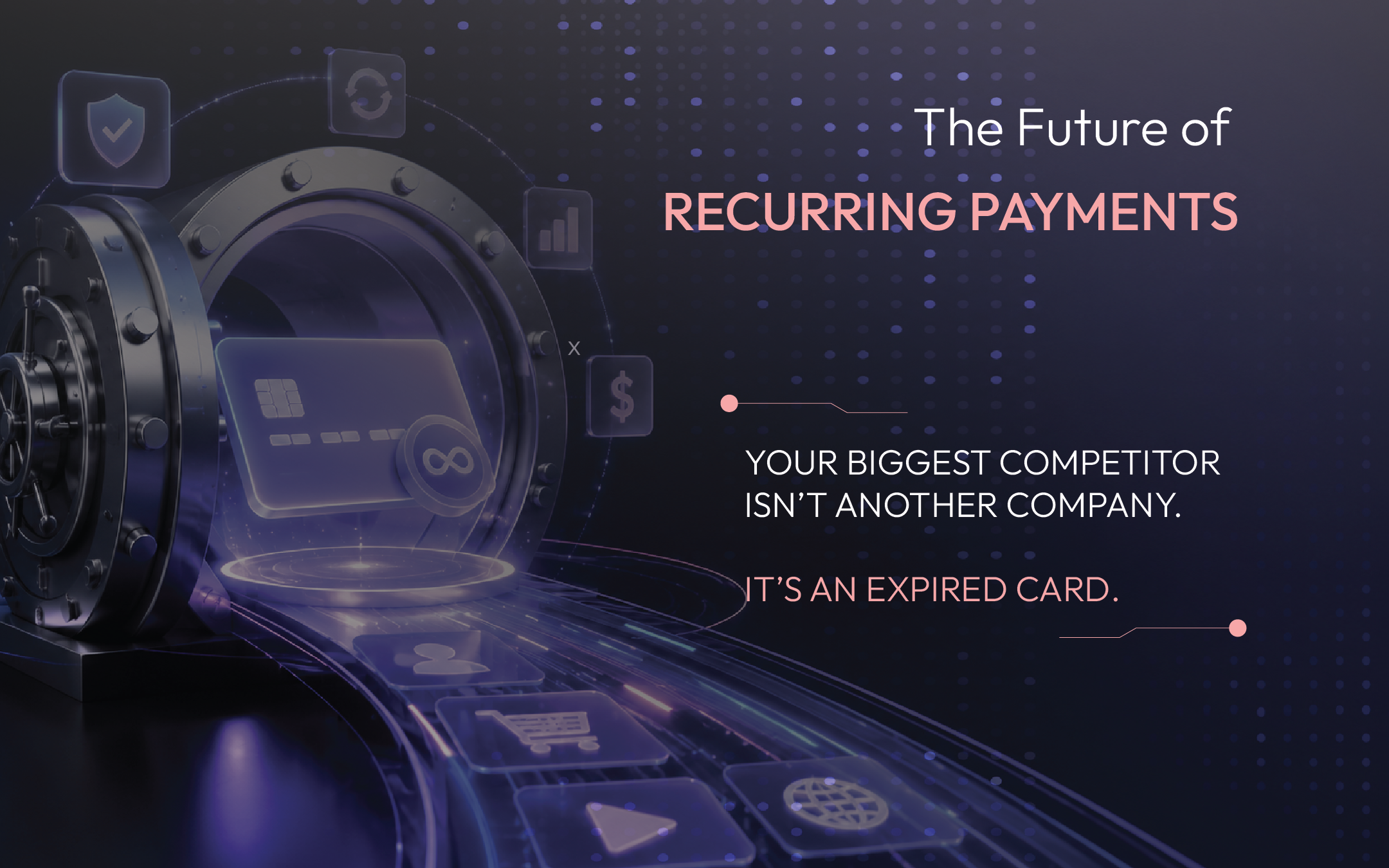
Recurring payments have quietly become one of the most powerful business models in the modern economy. From SaaS platforms and streaming services to fintech apps, subscription commerce, and iGaming operators, businesses increasingly rely on recurring revenue to create predictability, improve customer lifetime value, and strengthen investor confidence. Acquiring a customer is expensive. Retaining one is profitable. As a result, the subscription economy has transformed recurring billing from a back-office function into a critical driver of business growth.
Yet despite this evolution, many organizations continue to treat recurring payments as an administrative process rather than a strategic discipline. They invest heavily in customer acquisition, onboarding, personalization, and engagement while paying surprisingly little attention to what happens after a customer enters their payment details. The assumption is simple: once a payment method is stored, future transactions will take care of themselves.
The reality is very different.
Every year, businesses lose substantial amounts of revenue not because customers choose to leave, but because payments fail. Cards expire, credentials become outdated, issuers decline legitimate transactions, and fraud systems mistakenly block genuine customers. What appears on the surface as customer churn is often a payment problem hiding in plain sight. As competition intensifies and customer acquisition costs continue to rise, this challenge is becoming increasingly difficult to ignore.
The future of recurring payments will not be defined by who acquires the most customers. It will be defined by who is most effective at protecting the revenue generated from customers they have already acquired.
The Hidden Revenue Leak Behind Subscription Growth
Most growth discussions focus on acquisition. Marketing teams optimize campaigns. Product teams improve onboarding. Sales teams drive new customer sign-ups. While these activities remain important, they often overshadow one of the largest sources of lost revenue in subscription businesses: involuntary churn.
Unlike voluntary churn, where customers actively decide to cancel a service, involuntary churn occurs when a payment fails despite the customer’s intention to remain subscribed. The customer may still value the product, have sufficient funds available, and fully intend to continue the relationship. Yet because of a payment issue, the subscription is interrupted and revenue is lost.
The causes are remarkably common. Cards expire. Banks replace compromised credentials. Customers receive upgraded cards. Payment details change. Fraud systems generate false positives. Issuers apply risk controls that inadvertently block legitimate transactions. Individually, these events may appear insignificant. Collectively, they represent billions in lost revenue across the global subscription economy every year.
What makes involuntary churn particularly damaging is that it occurs after the customer acquisition cost has already been incurred. Businesses spend significant resources attracting, converting, and retaining customers, only to lose them because a recurring transaction fails at the wrong moment. In many cases, organizations classify these losses as customer churn when the true cause is payment friction.
This distinction matters because payment-related churn is often preventable. While businesses cannot eliminate every failed transaction, they can significantly improve their ability to recover revenue and reduce unnecessary payment failures. The future of recurring payments will increasingly focus on protecting existing revenue streams rather than simply pursuing new ones.
Why Traditional Billing Models Are Breaking Down
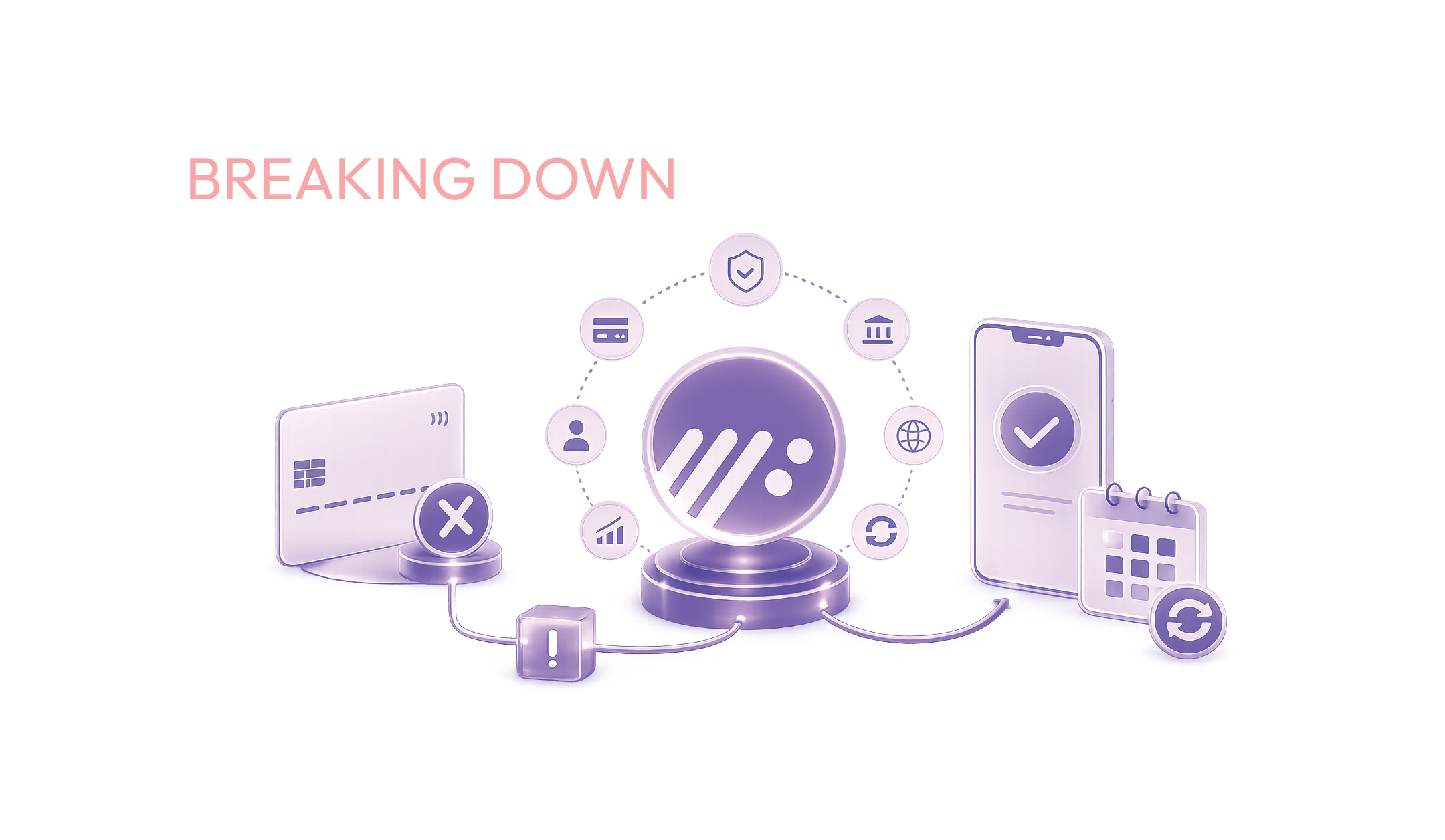
For many years, recurring billing followed a relatively simple process. A customer’s card was stored, a transaction was initiated according to a billing schedule, and the payment either succeeded or failed. This approach worked well in a world where payment ecosystems were less complex and customer expectations were lower.
Today’s environment is fundamentally different.
Consumers use multiple devices, digital wallets, alternative payment methods, and a growing range of financial products. Payment providers operate across multiple regions with varying authorization behaviors. Issuers employ increasingly sophisticated fraud and risk management systems. Regulatory requirements continue to evolve. At the same time, customers expect payment experiences to be seamless, invisible, and reliable.
In this environment, static billing logic is no longer sufficient. A failed recurring payment is not simply an operational event. It provides valuable information about issuer behavior, credential quality, customer payment preferences, routing performance, and potential recovery opportunities. Organizations that continue to treat recurring billing as a back-office process miss the opportunity to optimize payment outcomes.
The subscription economy has matured beyond simple billing automation. Payment success has become a competitive differentiator. Businesses that understand why payments fail and how to recover them effectively are increasingly outperforming competitors that rely on traditional billing models.
The future belongs to organizations that view recurring payments not as a billing process, but as an ongoing optimization discipline.
How Network Tokens and Payment Orchestration Are Changing the Game
Two technologies are playing an increasingly important role in the evolution of recurring payments: network tokenization and payment orchestration.
Network tokens address one of the most common causes of recurring payment failure: outdated credentials. Traditional subscription billing relies heavily on stored card data. When a card expires, is replaced after fraud, or is reissued by a bank, merchants often lose the ability to process future payments successfully. The customer relationship remains intact, but the payment credential becomes unusable.
Network tokens solve this challenge by replacing static card credentials with network-managed payment identities that remain connected to the issuer ecosystem. As underlying card information changes, the token can often continue functioning without interruption. This reduces payment failures, improves authorization rates, and helps businesses preserve recurring revenue that would otherwise be lost.
The benefits extend beyond payment performance. Network tokenization also supports broader industry initiatives around security, PCI scope reduction, and credential protection. What begins as a security improvement quickly becomes a revenue optimization strategy.
Payment orchestration introduces another layer of intelligence. Modern subscription businesses often work with multiple PSPs, acquirers, payment methods, and fraud providers. Managing these relationships independently creates complexity while limiting visibility into payment performance. Payment orchestration provides a centralized decision-making layer that enables businesses to optimize transactions in real time.
Rather than treating all recurring payments equally, orchestration platforms can evaluate performance data, issuer behavior, geographic factors, and routing opportunities before determining the optimal path for a transaction. If one provider delivers stronger authorization rates for specific issuers, transactions can be routed accordingly. If a payment fails, intelligent retry logic can identify the best recovery strategy. If payment performance changes, routing decisions can adapt automatically.
Together, network tokenization and payment orchestration are transforming recurring payments from a passive billing process into an active revenue optimization function. Businesses no longer need to accept payment outcomes as fixed. They can influence them.
The Future of Recurring Payments Is Invisible
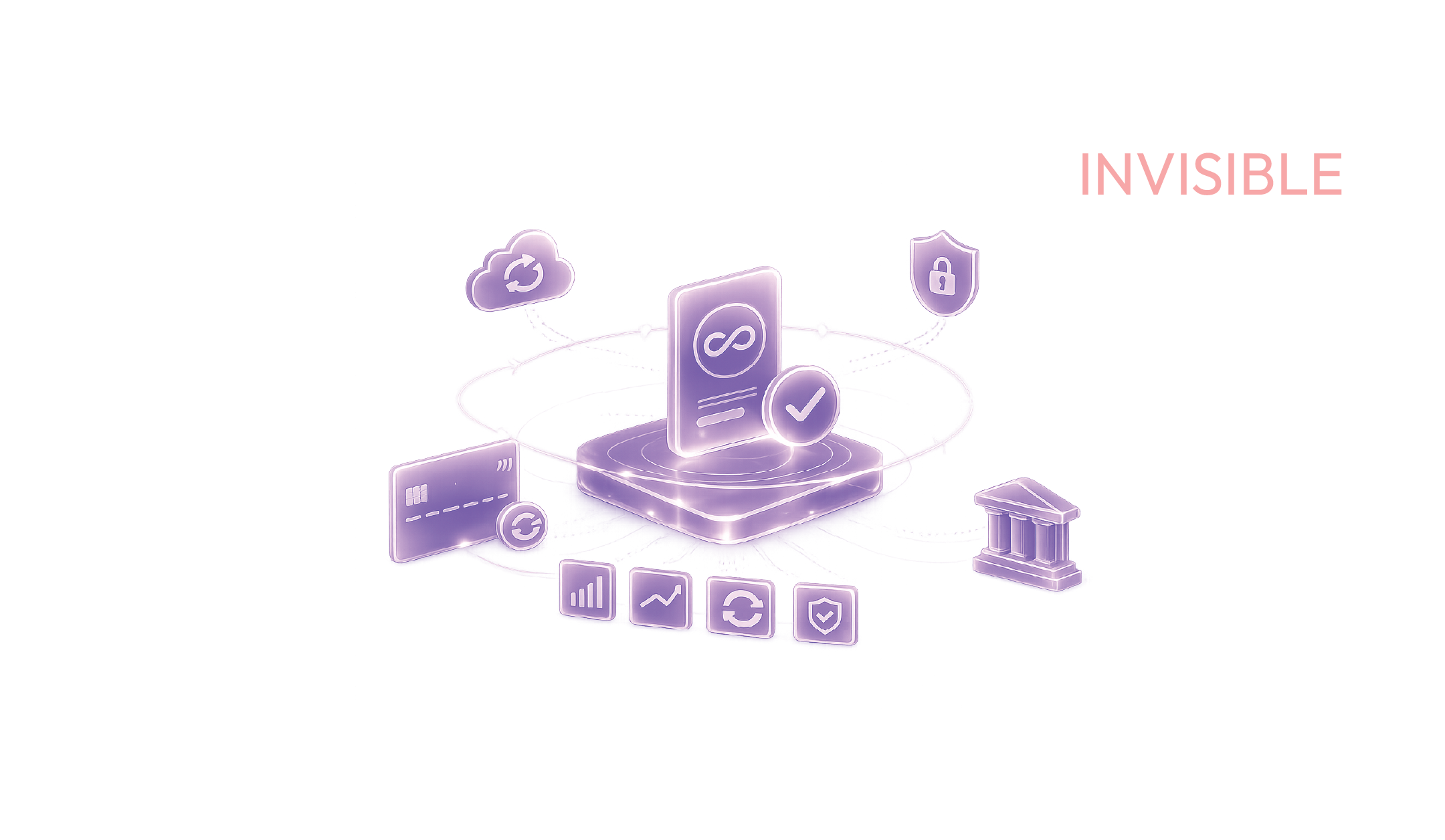
The most successful payment experiences are the ones customers never think about.
Customers do not care about authorization rates, tokenization strategies, routing logic, or issuer behavior. They simply expect their subscriptions to continue working. When a payment succeeds, it goes unnoticed. When a payment fails, the customer notices immediately.
The future of recurring payments is therefore moving toward invisibility. Credentials will update automatically. Transactions will route intelligently. Failed payments will trigger sophisticated recovery workflows. Security controls will become increasingly embedded within the payment ecosystem rather than layered on top of it. Customers will experience fewer interruptions, while businesses will benefit from stronger retention and more predictable revenue streams.
This transformation is not driven by a single technology. It is the result of network tokens, payment orchestration, real-time decisioning, advanced analytics, and increasingly intelligent payment operations working together. Each component contributes to a payment ecosystem that is more resilient, more efficient, and better aligned with customer expectations.
The businesses that benefit most from this shift will not necessarily be those with the largest subscriber bases. They will be the organizations that build the most effective payment infrastructure behind those subscriptions. As recurring revenue becomes increasingly important across industries, payment performance will become an even more significant source of competitive advantage.
Final Thoughts
For years, recurring payments were viewed primarily as a billing function. That perspective is becoming outdated. In today’s subscription economy, recurring payments sit at the intersection of revenue growth, customer retention, operational efficiency, and payment performance.
The businesses that thrive over the next decade will not simply focus on acquiring customers. They will focus on protecting the revenue generated by those customers through better payment infrastructure, smarter recovery strategies, and more intelligent decision-making. Network tokenization, payment orchestration, and real-time payment optimization will increasingly become standard components of successful subscription businesses.
Most companies still think of recurring payments as a mechanism for charging customers every month. The most successful organizations understand that recurring payments are really about something much more valuable: ensuring that revenue continues to flow without interruption, without friction, and without the customer ever having to think about it.
This version reads much more like a professional payments-industry publication: fewer sections, longer analytical paragraphs, significantly less whitespace, and a stronger executive narrative throughout.
Related articles


Let’s Build the Right
Flow for You
Ready to elevate your digital payments? Our team is here to tailor a custom, high-performance infrastructure that scales with your ambitions. Let’s build your next competitive advantage - together.