
Payment Orchestration vs Payment Gateway: What’s the Difference?
For many businesses, the terms payment gateway and payment orchestration are used interchangeably. Both are involved in online payments. Both sit between the customer and the broader payment ecosystem. Both play an essential role in helping merchants accept and process transactions.
Yet they solve fundamentally different problems.
This confusion is understandable. Historically, merchants only needed a payment gateway. They worked with a single acquirer, operated in a limited number of markets, and accepted a relatively small range of payment methods. The primary challenge was enabling online payments in a secure and reliable way. If transactions could be processed successfully, the infrastructure was considered effective.
That reality has changed dramatically.
Today’s merchants operate across multiple geographies, support numerous payment methods, work with multiple PSPs and acquirers, and face growing pressure to optimize approval rates, reduce payment costs, and improve customer experiences. Payments are no longer simply an operational necessity. They have become a strategic component of growth.
As payment ecosystems have become more complex, a new challenge has emerged. Processing payments is no longer enough. Merchants need to optimize them. This is where payment orchestration enters the picture.
Understanding the difference between a payment gateway and a payment orchestration platform is no longer a technical discussion reserved for payment teams. It is increasingly a business decision that impacts conversion, revenue, operational efficiency, and long-term scalability.
Payment Gateways Process Payments. Payment Orchestration Optimizes Them.
At its core, a payment gateway is a connectivity layer. When a customer enters payment details and submits a transaction, the gateway securely captures the information and transmits it to the appropriate processor, acquirer, or financial institution for authorization. The gateway’s primary responsibility is to facilitate communication between the merchant and the payment ecosystem.
For years, this model served merchants well. The objective was straightforward: securely move payment data from one point to another and receive an authorization response. Most payment gateways still excel at this function today. They provide secure transaction processing, tokenization capabilities, payment method integrations, and reporting functionality. Without payment gateways, online commerce would not exist in its current form.
The challenge is that modern payment environments require much more than connectivity.
Consider a merchant operating across Europe, Latin America, and Asia. One acquirer may deliver exceptional approval rates in Germany but perform poorly in Brazil. Another provider may offer competitive pricing but experience periodic service disruptions. A third may specialize in specific alternative payment methods that are critical for customer conversion in certain markets. In this environment, simply transmitting transactions is no longer enough.
This is where payment orchestration changes the equation.
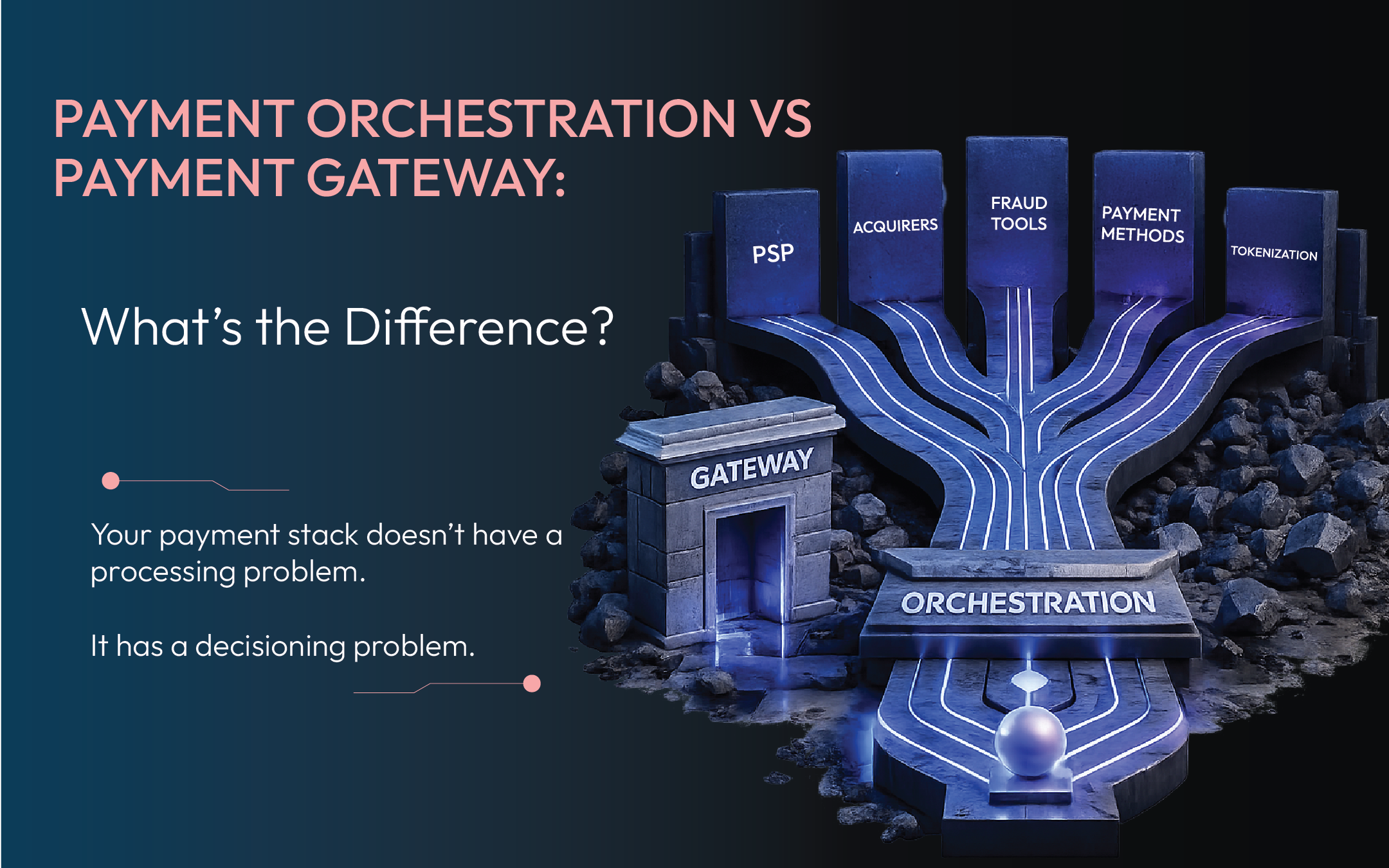
Rather than serving as another connection point, a payment orchestration platform acts as the intelligence layer above the payment stack. It connects gateways, PSPs, acquirers, fraud tools, tokenization services, and payment methods through a centralized platform. More importantly, it determines how payments should move through that ecosystem in order to maximize performance.
While a payment gateway asks, “How do we process this payment?”, payment orchestration asks, “How do we process this payment in the most effective way possible?”
That distinction may appear subtle, but it represents a fundamental shift in how payment infrastructure is managed.
Why Payment Performance Has Become a Strategic Priority
The rise of payment orchestration is directly tied to a broader transformation within the payments industry. Historically, payment success was measured by availability. If customers could complete transactions, the payment stack was considered successful.
Today, that definition is far too narrow.
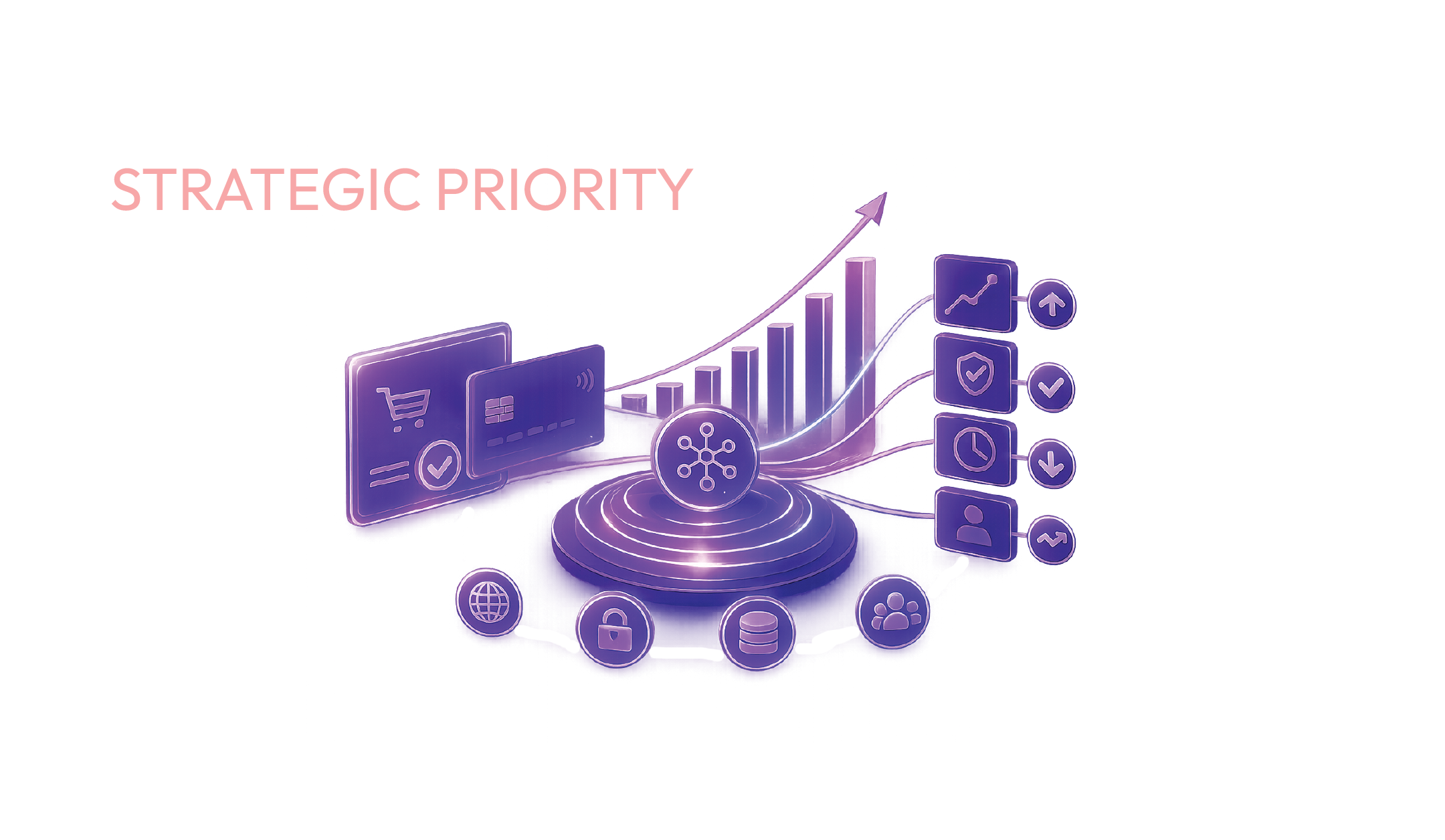
Merchants increasingly recognize that payment performance directly impacts revenue. A declined transaction is not simply a technical event. It is a lost sales opportunity. Poor routing decisions can reduce authorization rates. Provider outages can disrupt customer experiences. Inefficient retry strategies can lead to unnecessary payment failures. Even small improvements in payment performance can generate significant financial results at scale.
Consider a merchant processing hundreds of millions of euros annually. A one percent improvement in authorization rates can translate into millions in additional revenue without acquiring a single new customer. Similarly, reducing payment failures in subscription businesses can significantly improve retention and customer lifetime value.
As a result, payments are no longer viewed solely as a cost center. They are increasingly viewed as a growth lever.
This shift has exposed the limitations of static payment infrastructure. Traditional gateway-centric models often provide limited visibility into payment performance across providers. Routing rules become difficult to manage. Integrations multiply. Operational complexity grows. Payment teams spend increasing amounts of time maintaining infrastructure rather than optimizing outcomes.
The challenge is no longer enabling payments.
The challenge is maximizing the percentage of payments that succeed.
That requires intelligence, flexibility, and real-time decision-making capabilities that traditional gateway models were never designed to provide.
The Rise of the Payment Intelligence Layer
Payment orchestration is best understood as the evolution of payment infrastructure from transaction processing to transaction optimization.
Rather than forcing merchants to manage multiple payment providers independently, orchestration platforms create a centralized control layer that sits above the payment ecosystem. Through a single integration, merchants can connect multiple PSPs, acquirers, payment methods, fraud tools, and tokenization services while maintaining centralized visibility and control.
The real value, however, comes from decisioning.
Modern orchestration platforms can evaluate transactions in real time and determine the optimal path for processing. If one provider is experiencing degraded performance, traffic can be redirected automatically. If certain issuers consistently approve transactions through specific acquirers, routing logic can adapt accordingly. If a transaction fails, intelligent retry strategies can recover revenue that would otherwise be lost.
This capability transforms payments from a static infrastructure function into a dynamic optimization engine.
The concept is similar to how modern navigation applications operate. Drivers no longer simply choose a route and hope for the best. Navigation systems continuously analyze traffic conditions, road closures, and travel times before recommending the optimal path. Payment orchestration applies the same principle to payment transactions.
Every transaction becomes an opportunity for optimization.
This intelligence layer is becoming increasingly important as merchants adopt multi-PSP strategies, expand internationally, and seek greater control over payment performance. Payment environments are becoming too complex to manage effectively through manual processes and static routing configurations alone.
As complexity grows, orchestration provides the visibility and flexibility necessary to maintain performance at scale.
The Future of Payments Is Not Processing. It’s Decisioning.

The distinction between payment gateways and payment orchestration ultimately reflects a broader shift taking place across the payments industry.
For decades, innovation focused on enabling transactions. The challenge was connectivity. Merchants needed access to processors, acquirers, and payment methods. Payment gateways solved that challenge and remain a critical component of the payment ecosystem today.
The next era of payments is focused on optimization.
As merchants gain access to more providers, more payment methods, and more markets, competitive advantage increasingly comes from making better decisions. Which provider should receive a transaction? Which routing strategy maximizes authorization rates? How should failed payments be recovered? Which payment methods perform best in specific markets? How can payment costs be reduced without sacrificing conversion?
These questions cannot be answered by connectivity alone.
They require intelligence.
This is why payment orchestration is becoming a strategic priority for growing merchants. It provides the framework necessary to transform payments from a collection of disconnected integrations into a coordinated, performance-driven ecosystem.
Payment gateways remain essential. They are the infrastructure that enables transactions to move through the payment ecosystem. But increasingly, merchants need more than infrastructure. They need visibility. They need flexibility. They need decision-making capabilities.
In other words, they need orchestration.
Final Thoughts
The conversation around payment gateways versus payment orchestration is often framed as a technology comparison. In reality, it is a discussion about business priorities.
A payment gateway helps merchants accept payments.
Payment orchestration helps merchants optimize payments.
As payment ecosystems become more fragmented, global, and competitive, that distinction becomes increasingly important. The merchants that gain the greatest advantage will not necessarily be those with access to the most providers or the largest payment stacks. They will be the ones that make the smartest decisions across those environments.
Because in modern payments, success is no longer determined by whether a transaction can be processed.
It is determined by whether it is processed in the smartest possible way.
Related articles

Let’s Build the Right
Flow for You
Ready to elevate your digital payments? Our team is here to tailor a custom, high-performance infrastructure that scales with your ambitions. Let’s build your next competitive advantage - together.